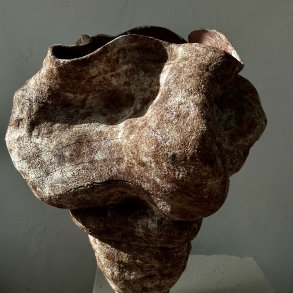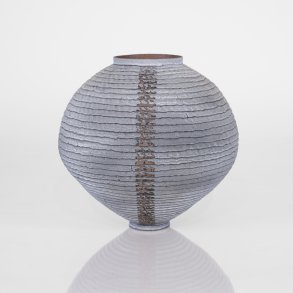
This masterclass focuses on wheel-throwing techniques within the Karatsu ceramic tradition. Known for its direct approach and strong connection to natural materials, Karatsu ware has been an important part of Japanese pottery for centuries.
Throwing techniques, forms and traditions of Karatsu pottery
Join this masterclass to explore wheel-throwing techniques inspired by the Karatsu ceramic tradition. Through demonstrations and hands-on practice, participants will work with traditional forms and methods that reflect the direct, functional approach of Karatsu pottery.
Dates: 4th - 6th of September, 2026
Location: LerKalaset, Ry, Denmark
Duration: 3 days
Teaching hours: 9:30 AM – 5:30 PM (including 1-hour lunch break)
Format: wheel throwing
Level: intermediate wheel-throwing skills. Participants should be able to easily center and throw a cylinder on the wheel
Includes: Japanese tool set including a bull’s tongue rib and a trimming tool, clay, coffee/tea/snacks
Firing: Participants will have the option to have their pieces fired by paying a kiln and glazing service fee (DKK 155-1200 per piece, depending on size). Unfired pieces can be collected at no additional cost.
Number of masterclass enrolments: 10
Masterclass enrolment fee: DKK 6485 (865 €)
Guided by Karatsu potter Michael Martino, participants will work with traditional throwing methods, explore characteristic Karatsu forms and learn efficient approaches to producing functional tableware on the wheel. Through demonstrations, hands-on practice and visual presentations, the masterclass offers insight into both historical and contemporary approaches to Karatsu ceramics.
Introduction
This masterclass offers an introduction to the tools, techniques and philosophy of the Karatsu ceramic tradition. Participants will explore the origins of Karatsu ware and the characteristically simple, direct approach of Karatsu potters.
The masterclass will also touch on traditional methods for processing natural materials used in Karatsu clay bodies and glazes, providing insight into the relationship between local resources and the finished work.
Techniques
Karatsu potter Michael Martino will demonstrate and teach throwing techniques using the distinctive bull’s tongue rib – a tool particularly well suited for shaping short clays and non-clay bodies such as porcelain.
The masterclass places special emphasis on functional tableware and the creation of classic Karatsu food-dish forms. By making these traditional shapes, participants will gain a deeper understanding of both their structure and their practical use. Efficient production methods will also be highlighted, including throwing forms that require minimal trimming (and therefore less clay recycling), throwing from the hump and approaches to functional surface decoration.
Working method
Most of the masterclass will be devoted to hands-on learning. Sessions will combine demonstrations by Michael with guided practice, during which participants will receive individual feedback and advice as they work.
In addition to studio practice, the masterclass will include photographic presentations introducing the diversity of Karatsu styles and techniques. These presentations will also explore modern interpretations of Karatsu ware and contemporary Karatsu potters’ approaches to firing.
The instructor
Michael Martino grew up between rural New Mexico and urban Texas in the United States. His fascination with pottery began in childhood while exploring the hills of northern New Mexico, where he frequently encountered pottery shards and ancient stone tools.
He first moved to Japan in 1990 and has been deeply immersed in the Karatsu ceramic tradition since 2002, when he began an informal apprenticeship with the veteran Karatsu potter Tsuruta Yoshihisa, who became his mentor in both ceramics and kintsugi.
In 2007 Michael established his studio in Taku, Japan, and in 2011 he built an anagama-style wood kiln. Since then, he has dedicated his practice to creating beautiful – primarily functional – ceramics using locally sourced wild clay, stone and ash.
A significant part of his work centres on tea utensils for the Japanese tea ceremony, including a large number of tea bowls. Michael believes that a proper tea bowl exists in two realms: as a functional vessel and as a sacred art object – one that elevates the space and experience in which it is used.
Practical information regarding transport and accommodation:
If you need accommodation close to the studio, we recommend
-
Knudhule Badehotel https://knudhule.dk/,
-
Birksø Hotel Ry https://birkso.dk/hoteller/ry-oestjylland/
-
Lyng Dal Hotel https://www.lyngdal-hotel.dk/english